Girl Games: Fun Mini Games
- 3.6
- Rating
- 5.00M
- Installs
- Free
- Price
 Analysis by App-foxy
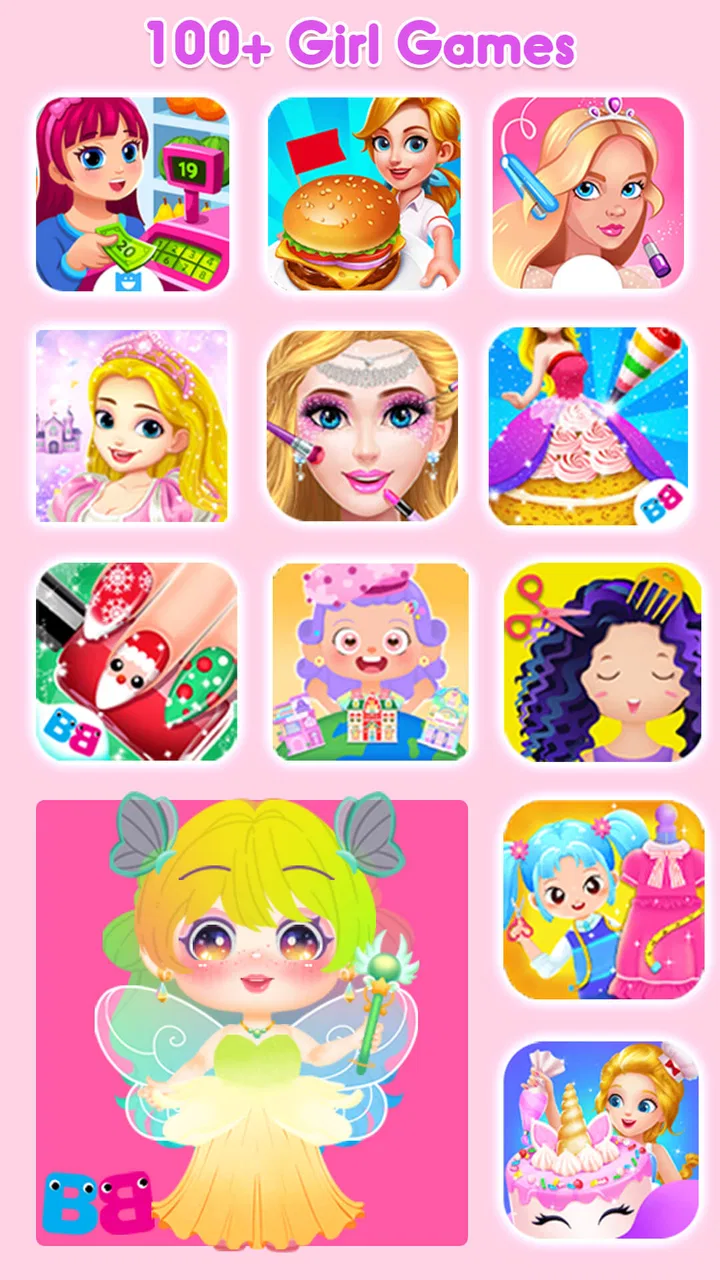
I spent time with Girl Games: Fun Mini Games as a casual educational game built around a broad collection of style-focused activities. Its appeal is easy to understand: instead of committing to one dress-up title or one makeup simulator, it brings several familiar themes together, including outfits, beauty routines, nail design, and other short activities. I found it most enjoyable when I wanted something light, visual, and easy to pick up without learning complicated controls.
The game is free and rated for Everyone, which makes it approachable for younger players as well as adults looking for a relaxed time-killer. BonBonGame.com is the developer, and the title sits in the educational category rather than presenting itself as a competitive action game. That distinction matters because the value here comes from choosing, arranging, and experimenting with appearances, not from reflexes or demanding strategy.
Its broad audience is reflected in its reach: the game has passed five million installs, while its average sits at 3.6 from roughly 1.7 thousand ratings. I read that combination as a sign of strong curiosity and accessible presentation, but also of mixed expectations. Some players will enjoy the variety immediately; others may find that a collection of small activities feels less focused than a dedicated fashion game.
You May Also Like

 Blood Strike: 2.5 Anniversary
Blood Strike’s Loadouts Turn Every Drop Into a Tactical Gamble
A close look at Blood Strike’s custom loadouts: how fast access to signature weapons reshapes its battle royale rhythm, rewards preparation, and narrows the gap between fights.

 Pandora - Music & Podcasts
Pandora’s Music Is Easy to Start, but Harder to Recover
Pandora’s strength is its low-effort path from a seed to a station. Its weak spot is how much confidence it asks you to place in connection, setup, and quiet recovery.

 8 Ball Pool
 Is Built on Rivalries, Rematches, and Routine
A close look at the rivalries, rematches, shared routines, and unanswered safety questions that turn a quick pool match into a persistent mobile community.

 Samsung Music
’s Quiet Strength Is Playing What You Already Own
Its reach comes less from spectacle than from dependable access to a personal library. That simplicity is both the app’s strongest retention engine and its ceiling.

 AccuWeather: Weather Radar
AccuWeather Review: A Quick, Clear Forecast for Everyday Decisions
For everyday plans, the best forecast is the one you can understand quickly. AccuWeather makes rain timing, radar, and local conditions easy to act on, with a few trade-offs.

 Hill Climb Racing
Why Hill Climb Racing Still Turns Crashes Into One More Run
A tiny car, a bumpy hill and one more upgrade: Hill Climb Racing keeps resurfacing because its simple chaos makes every near-miss feel personal.
More From Our News Desk



How the first goals shape the experience
The early appeal is not a complicated mission structure. The first goal is simply to make choices and see how they work together. I could approach an outfit as a quick experiment, switch attention to makeup, or spend longer refining a nail look. That freedom gives the opening minutes a pleasant, low-pressure rhythm because there is no need to master a large ruleset before doing anything interesting.
For a child, the first session can work as a simple exercise in matching colors, comparing styles, and making a visual decision. For an older player, it feels closer to browsing a small set of themed dress-up activities. The educational label makes sense in this limited, practical way: the game encourages recognition, selection, and creative arrangement, although it should not be mistaken for a structured learning tool with lessons or academic progression.
One useful way to play is to set a small personal brief before starting. I might decide to create a look around one color, keep the makeup subtle, or make the nails the main feature. This turns a loose collection of choices into a focused mini-task. It is a better approach than tapping randomly, especially when the novelty of the first few selections begins to fade.
The collection format also affects how quickly the game communicates its purpose. A single-purpose title usually teaches its central loop immediately, while this one asks the player to explore several related areas. That variety is helpful when one activity does not hold attention, but it can also make the opening feel more like sampling than progressing. I would give a new player a few minutes to try different sections before deciding whether the overall format suits them.
Small decisions matter more than speed
I did not approach this as a game where quick tapping is the main skill. The enjoyable part is comparing alternatives and noticing how one choice changes the overall look. Selecting an outfit first and then adjusting beauty details creates a more coherent process than treating every screen as an isolated set of buttons. This is a modest insight, but it makes the experience feel more deliberate.
Another practical tip is to avoid making every element equally dramatic. A strong outfit can become visually crowded if the makeup and nails are also pushed to extremes. I found that alternating between a bold centerpiece and quieter supporting choices made the final result feel more considered. Players who enjoy design may get more from this self-imposed balance than from simply selecting the most noticeable option each time.
The game is therefore strongest as a short creative routine. It gives me a recognizable theme, a set of visual decisions, and enough freedom to try another combination. It is less convincing if I expect a detailed fashion simulator with deep customization, realistic styling rules, or a long-form story attached to every creation.
Progress signals, challenge, and pacing
The biggest question for a collection like this is what keeps the player moving after the initial curiosity. In my experience, the progress signal is mainly the result on screen: a new combination, a different theme, or a completed look that feels more satisfying than the previous one. That kind of feedback is immediate, but it is also personal. Players who need explicit goals, visible milestones, or a strong sense of unlocking may find the motivation less powerful than in a dedicated progression game.
This is where the title differs from many alternatives in the same broad space. A focused dress-up game can build its identity around a wardrobe, a character, or a sequence of themed challenges. A makeup-only game can spend more time on application order and visual detail. Here, the advantage is breadth. I can move from clothing to beauty and nails without installing several separate games, but each area naturally receives less attention than it would in a specialist app.
The pacing follows that trade-off. Short sessions work well because each activity is easy to understand and the player can change direction when interest drops. I could imagine opening it while waiting for an appointment, during a quiet break, or when I wanted something more interactive than scrolling. The same lightness becomes a limitation during a long session: without a clearly felt rise in stakes, repeated choices can start to blend together.
That does not make the game unsuccessful. It means the pacing is better suited to bursts than to marathon play. I would not recommend treating it like a campaign that must be completed in order. Instead, I would use it as a rotating set of small creative prompts. When one section feels repetitive, moving to another theme is more sensible than forcing the same activity to provide depth it was not designed to provide.
How the challenge curve feels in practice
The challenge is gentle, and that is appropriate for the Everyone age rating. There is no reason to expect punishing failure or a steep skill curve from a game centered on appearance choices. The difficulty comes from deciding what works together, not from overcoming a demanding control test. Younger players can participate without feeling blocked, while adults can use the same simplicity as a way to relax.
Still, gentle challenge needs variety to remain interesting. If every choice feels equally acceptable, the player may stop feeling that decisions matter. I found more engagement when I treated each look as a small design problem: choose a focal point, keep the palette consistent, and avoid adding details merely because they are available. That approach creates a challenge through judgment rather than through a formal difficulty setting.
This also explains who may want a different option. Players looking for timed rounds, competitive scoring, complex resource management, or a demanding unlock path should choose a more specialized game. This title is not the right fit for someone who measures enjoyment by difficult victories. Its challenge is expressive and informal, so the reward depends heavily on whether the player enjoys making and comparing visual choices.
Parents and guardians may appreciate the approachable presentation, but I would still suggest trying a session together if the child is very young. The simple controls make participation easy, and discussing why one color or style works with another can turn a passive activity into a more thoughtful one. That shared use is a stronger educational benefit than expecting the game alone to teach a formal concept.
Where retention helps and where it may feel thin
Because the game gathers multiple mini-game themes in one place, its main retention advantage is convenience. I do not have to leave one narrow activity completely when I want a change of mood. A player who enjoys fashion but occasionally wants nails or makeup has a reason to return, especially for short sessions.
The pressure to keep playing feels relatively low, which I consider a positive for casual users. I did not feel that I had to commit to a long sequence before receiving anything enjoyable. On the other hand, low pressure can also mean low urgency. Without a strong personal goal, a session may end as soon as the first round of experimentation is over.
My advice is to create a small rotation rather than repeat one activity continuously. For example, I might begin with an outfit, move to makeup, and finish with nails while trying to keep one color consistent across the whole result. This gives the collection a sense of continuity and makes the separate themes feel connected. It is one of the more useful ways to get extra value from the format without pretending it has a deeper progression system than it does.
The game’s free price lowers the barrier to trying that routine. I could explore the concept without making it a financial commitment, which is important for families deciding whether a broad collection is more useful than a focused alternative. The trade-off is that free casual games often need patience from the player when the experience is built around repeated, lightweight activities. I would judge it by whether the variety earns a place in my regular rotation, not by expecting the depth of a premium specialist title.
Who will enjoy it and who should skip it
I would recommend this game to someone who likes dress-up themes but does not want to choose between separate apps for clothing, makeup, and nails. It also suits players who prefer visual creativity over competition. The controls and ideas are approachable enough for younger users, while the quick format gives adults an easy way to fill a few minutes.
It is especially suitable for a player who enjoys making several versions of the same idea. Try a bright look, then a restrained one, then a style built around a single accent color. The collection becomes more interesting when I compare decisions instead of looking for one objectively correct result. That is also why it can work well as a shared activity between an adult and a child.
I would skip it if I wanted a strong narrative, a carefully developed character journey, or a deep simulation of fashion and cosmetics. I would also look elsewhere for serious educational content. The game uses creative choice in an educationally friendly way, but it is still primarily a casual game. A dedicated learning app would be a better choice for structured practice, explanations, or measurable academic progress.
Players who dislike browsing through many small activities may prefer a focused alternative. A specialist dress-up game can offer a clearer identity and a more concentrated set of decisions. Conversely, someone who becomes bored when a single theme is repeated may find this collection more comfortable because switching categories is part of its appeal.
Practical ways to get more from each session
- Use a color rule: choose one main color and let the other selections support it. This makes the styling process feel intentional.
- Change the order: begin with nails or makeup sometimes instead of always starting with clothing. The first decision can change the direction of the whole look.
- Compare versions: create a bold and a restrained interpretation of the same idea. This reveals more about the available choices than selecting items at random.
- Keep sessions short: move between themes when the activity starts to feel repetitive rather than forcing a long play period.
These habits also clarify the game’s limits. They add structure because the player supplies a goal, not because the title demands one. That can be liberating for creative users, but disappointing for anyone who expects the game to provide a detailed ladder of challenges and rewards.
My verdict on the progression
Girl Games: Fun Mini Games is a broad, accessible collection whose strongest progression signal is the player’s own growing sense of style. It offers early goals that are easy to understand, a mild challenge based on visual judgment, and pacing that works best in short visits. The variety helps it avoid the narrowness of a single-theme game, while the lack of a clearly demanding long-term structure may limit its appeal for dedicated players.
The current version is 2.4.6, and the game is available for Android devices running at least OS 9. Those details make it reasonably straightforward to consider for a compatible phone or tablet, particularly when the goal is a free, family-friendly game rather than a premium simulation. I would still check the device experience personally before making it a regular choice for a child, because enjoyment depends on how much the player likes open-ended visual decisions.
My honest recommendation is conditional but positive. If you want a convenient bundle of dress-up, makeup, and nail activities, this is an easy title to try. Its large install base shows that the concept reaches many players, although the average rating of 3.6 suggests that the collection will not satisfy everyone equally. I see it as a casual creative toy, not a deep progression game.
The best reason to keep it installed is variety without commitment. I can open it for a quick styling experiment, switch themes when one loses its charm, and stop without feeling that I abandoned a complicated campaign. If that sounds like the kind of relaxed play you want, BonBonGame.com’s collection is worth exploring. If you need substantial unlocks, escalating difficulty, or a more specialized experience, a focused alternative will probably serve you better.
FAQs for Girl Games: Fun Mini Games
01What types of mini-games are included in Girl Games: Fun Mini Games?
Girl Games: Fun Mini Games offers a diverse selection of mini-games designed to cater to various interests. You can find everything from fashion challenges, makeup tutorials, and cooking games to puzzle-solving activities. Each mini-game is crafted to provide entertainment and stimulate creativity, ensuring hours of fun for players of all ages.
02Is Girl Games: Fun Mini Games suitable for all age groups?
The app is primarily aimed at younger audiences, particularly kids and pre-teens, with age-appropriate content that's both entertaining and educational. However, older users who enjoy casual gaming experiences can also find it enjoyable. The app includes parental controls to ensure a safe gaming environment for younger players.
03Does the app require an internet connection to play?
Girl Games: Fun Mini Games can be played offline, making it perfect for travel or situations where internet access is limited. However, some features, such as updates or online leaderboards, may require an internet connection. It's advisable to connect occasionally to enjoy the full range of features and improvements.
04Are there in-app purchases or ads in Girl Games: Fun Mini Games?
The app includes both in-app purchases and ads. While the core games are free to play, additional content or features can be unlocked through purchases. Ads are present to support the free version, but users can opt for an ad-free experience by purchasing a premium version or specific in-app packs.
05How does Girl Games: Fun Mini Games ensure user safety and data privacy?
The app is committed to user safety and data privacy, adhering to industry standards and regulations. It uses secure data encryption methods to protect user information. Additionally, the app does not collect unnecessary personal data and provides clear privacy policies. Parents can review and adjust privacy settings to ensure their child's safety.
Pros
- Wide variety of mini-games available.
- User-friendly interface with easy navigation.
- Bright
- colorful graphics appeal to kids.
- Regular updates with new games added.
- No internet required for gameplay.
Cons
- Contains ads that can be disruptive.
- In-app purchases for unlocking content.
- Some games may repeat frequently.
- Limited parental controls available.
- High storage space requirement.

Girl Games: Fun Mini Games
Gallery